“When waste is recognised as a valuable resource, communities begin to see value in what was once overlooked. Income generated through community waste banks has not only encouraged behavioural change, but has also fostered a sense of pride among local residents in contributing to cleaner and more liveable communities.”
This reflection from a representative of a community waste bank established under the support of the MA-RE-DESIGN project highlights the tangible transformations achieved through the initiative. These include positive behavioural changes, stronger community participation, and increased collective awareness regarding sustainable waste management practices.
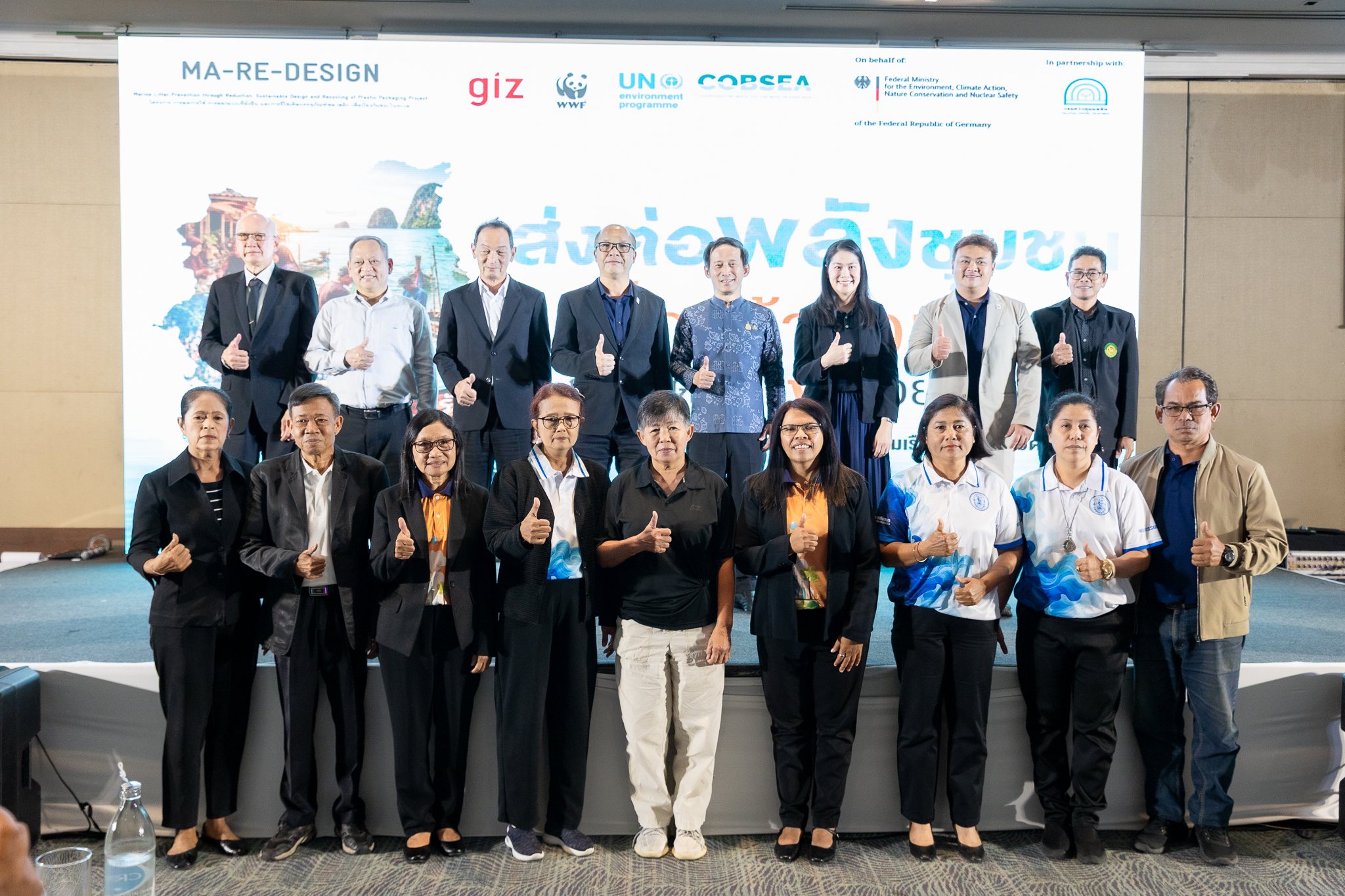
On 20 May 2026, WWF Thailand hosted the closing ceremony of the MA-RE-DESIGN Project under the theme “Empowering Communities Towards a Sustainable Waste Management Future” at Rua Rasada Hotel in Trang Province. The event marked the culmination of three years of project implementation and served as an opportunity to reflect on key achievements and lessons learned, while reinforcing the important role of multi-sector collaboration in advancing effective and sustainable local waste management systems.
Closing Ceremony Highlights Community-Led Sustainability. Dr. Rak Booncharoen, Mayor of Trang City Municipality, together with municipal executives, department heads, and members of the municipal council serving on the Plastic Smart Cities Working Group, participated in the closing ceremony of the MA-RE-DESIGN Project under the theme “Empowering Communities for a Sustainable Waste Management Future.” The event was officially opened by Mr. Songklod Sawangwong, Governor of Trang Province who delivered opening remarks and shared the province’s vision and policy directions on waste management. His remarks encouraged participants to apply the knowledge and experiences gained through the project into practical action at both household and community levels, beginning with individual behavioural change.
The event was also honoured by the participation of representatives from GIZ, Trang Municipality, and various partner organisations, who shared their perspectives and reaffirmed their commitment to supporting sustainable waste management and the advancement of the circular economy within the province.
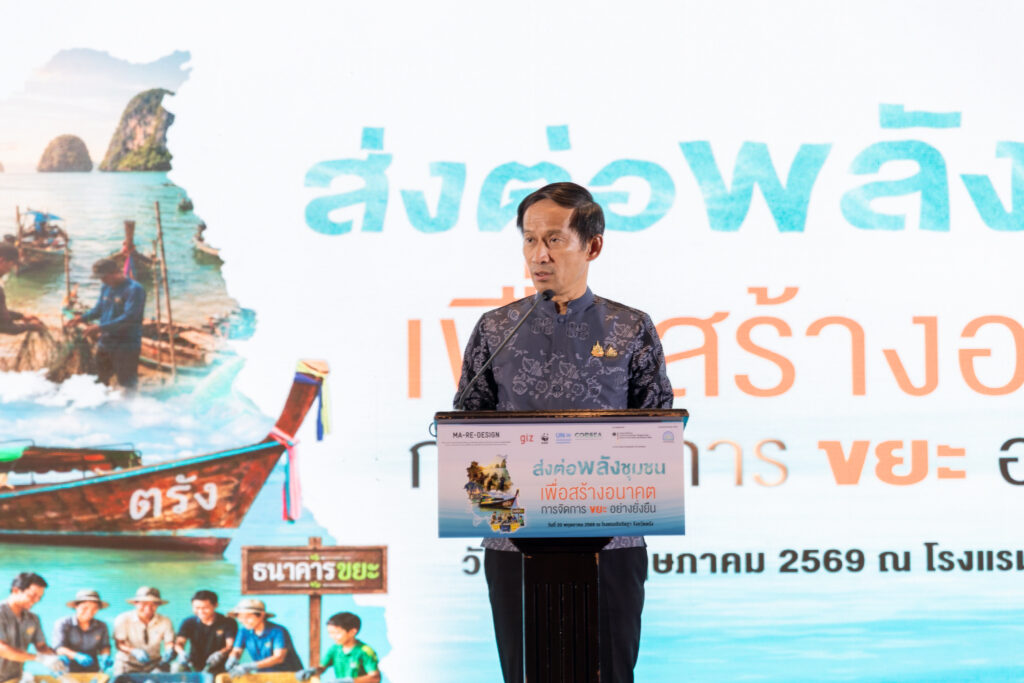
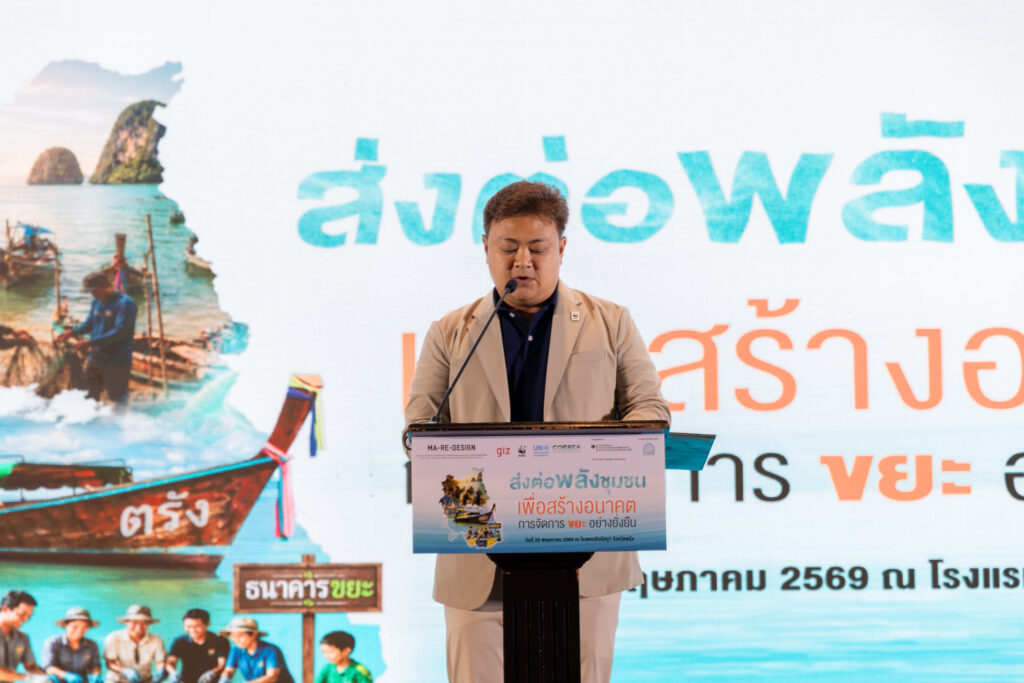
During the event, project achievements from the past three years in Trang Province were presented by Ms. Tika Kimkue, Field Coordinator of the MA-RE-DESIGN Project. She highlighted the project’s integrated and collaborative approach, which brought together Trang Municipality, local communities, schools, and network partners to establish practical and scalable waste management systems for long-term sustainability.
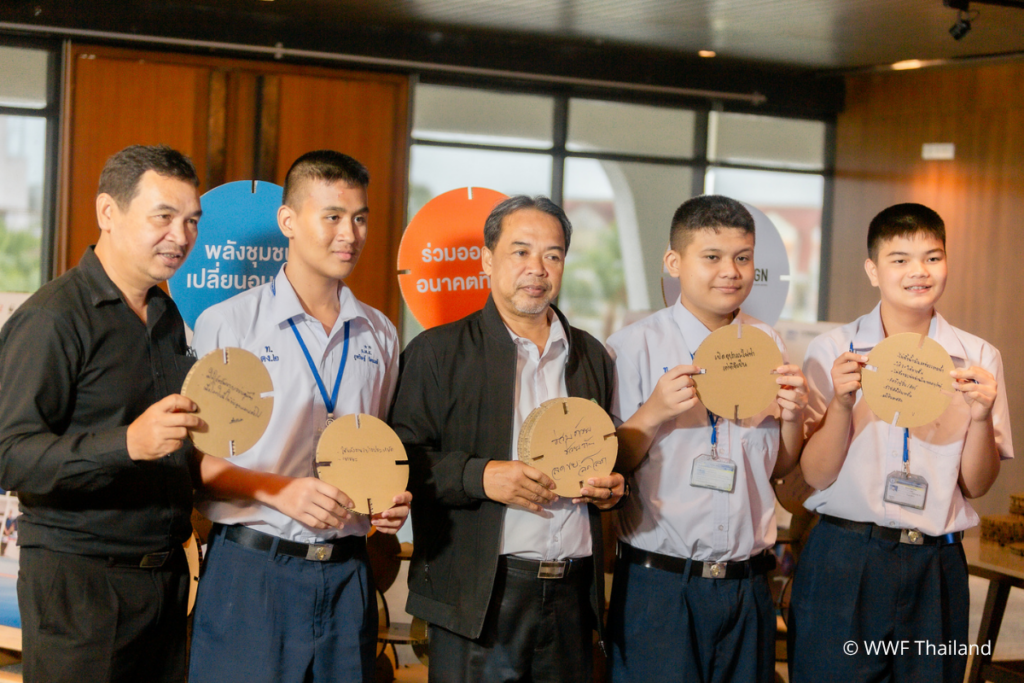
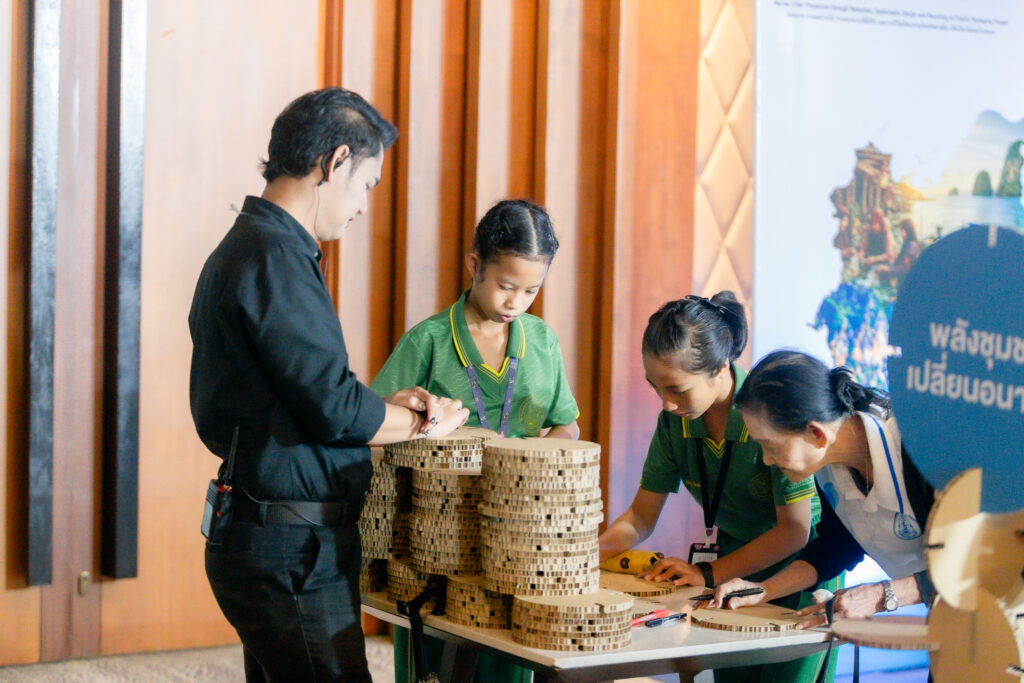
The project also aims to transform youth from passive recipients of knowledge into proactive changemakers. Student representatives from all eight municipal schools in Trang City, together with six community waste bank networks, Suan Chan Community, Yan Kan Kha 3 Community, Khok Khan Community, Bang Rak Community, Kapang Surin 2 Community, and Khok Yong Community have been equipped with educational materials and facilities to establish waste banks. By strengthening communication skills and extending knowledge to household and community levels that are becoming vital defenders against plastic leakage into nature.
One of the project’s significant milestones was the signing of a collaborative agreement with Trang Municipality to develop a “City Action Plan on Plastic Waste Management.” This initiative laid an important foundation for enabling Trang Province to establish “clear plans, effective systems, and genuine collaboration” in addressing plastic waste challenges. The action plan focuses on reducing and phasing out unnecessary plastic use, preventing waste generation at source, improving waste collection and management systems, and promoting plastic reuse and recycling in order to minimise waste leakage into the environment.
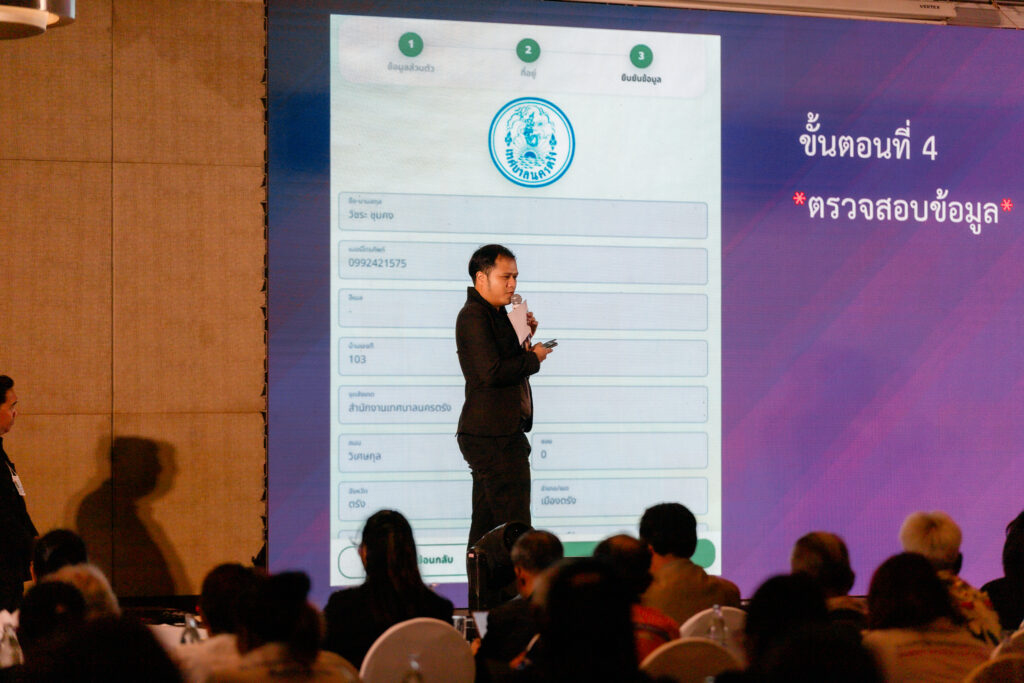
Another key highlight of the event was the soft launch of the “Ma Gep Ta website”, jointly developed by WWF Thailand and Trang City Municipality. The platform serves as a practical tool to support local waste management services by enabling residents to conveniently access waste collection services for different waste categories, as well as related information and updates. The platform also aims to strengthen public awareness regarding waste segregation at source. Participants at the event were invited to explore and test the system while learning how to use the platform effectively.
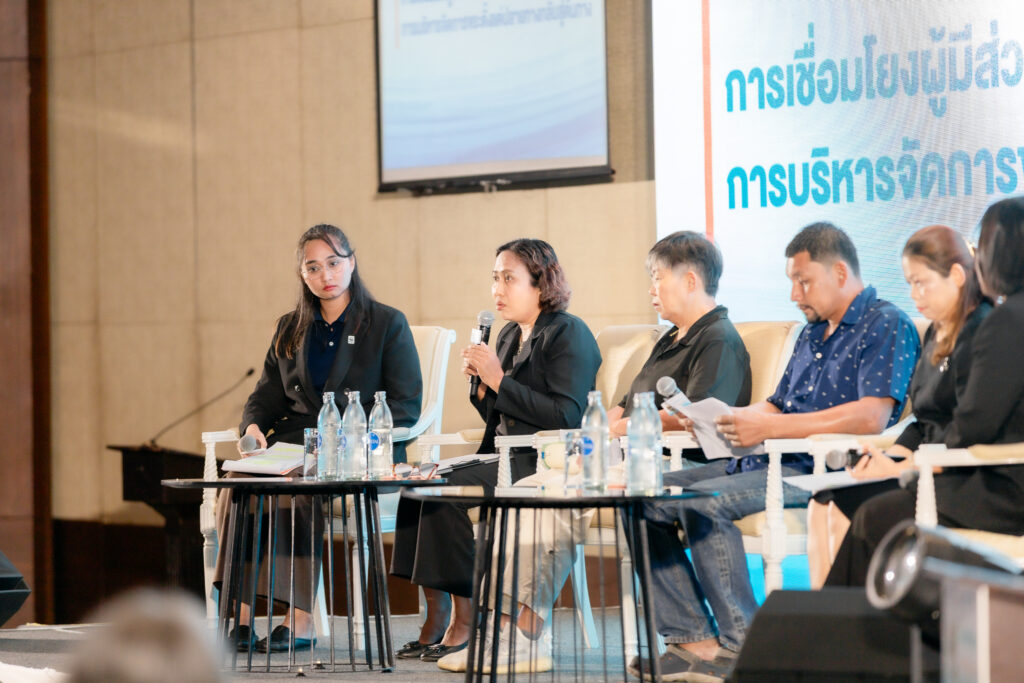
In addition, a panel discussion entitled “Building Strong and Sustainable Foundations to Drive the Circular Economy” was organised to emphasise the importance of connecting stakeholders across the entire waste management system — from upstream to downstream — to ensure that resources can be effectively recovered and reintegrated into the system, while reducing the volume of waste sent to final disposal.
The discussion brought together representatives from various sectors, including WWF Thailand, Trang Municipality, community waste bank committees, school representatives, and leaders of informal waste picker networks (Saleng). The panel provided a platform for exchanging experiences, operational approaches, and perspectives on fostering a Circular Economy at the community level. Importantly, the discussion reinforced a shared understanding that waste management is not the responsibility of any single organisation alone, but rather a collective responsibility requiring continuous cooperation from all sectors to achieve a sustainable future together.
The discussion brought together representatives from various sectors, including WWF Thailand, Trang Municipality, community waste bank committees, school representatives, and leaders of informal waste picker networks (Saleng). The panel provided a platform for exchanging experiences, operational approaches, and perspectives on fostering a Circular Economy at the community level. Importantly, the discussion reinforced a shared understanding that waste management is not the responsibility of any single organisation alone, but rather a collective responsibility requiring continuous cooperation from all sectors to achieve a sustainable future together.