“The recent tiger sighting indicates that Kuiburi Forest still holds high ecological potential and is ready to support the recovery of large carnivore populations—provided that protection and restoration efforts continue consistently.” – Bamrungrat Ploydam, Superintendent, Kuiburi National Park
The superintendent’s statement reflects renewed optimism for Kuiburi Forest, where tigers—an apex predator and a key indicator of ecosystem integrity—had been absent for more than a decade. The reappearance of tigers in this landscape is not only encouraging but also represents scientific evidence that the ecosystem is regenerating and capable of supporting high‑trophic‑level species once again.
Located in Prachuap Khiri Khan Province, Kuiburi Forest lies within the Tenasserim Range, forming an important ecological transition zone between central and southern Thailand. The forest is recognised for its rich biodiversity and serves as a vital watershed for the Kuiburi and Pran Buri rivers, which support local communities downstream. It is also home to a wide range of wildlife species, including Asian elephants, gaur, leopards, and many herbivores that serve as prey for large carnivores.
A healthy ecosystem depends on balance across every level of the food chain. Tigers, as apex predators, play a crucial role in regulating prey populations and maintaining ecological balance. Their presence is therefore considered a strong indicator of forest health, as tigers require sufficient prey, connected forest habitats, and safe environments to survive.
Historically, the Tiger Conservation Project in Kuiburi conducted tiger population surveys from 2006 to 2012, which revealed a precariously small population of 2-3 adult tigers , which declined to just 1 tiger after 2011 (data from Dr. Robert Steinmetz, Project Manager at that time). The last confirmed photographic evidence was obtained in 2012 by Suchin Wongsuwan, park official at that time, marking the final record before tigers disappeared from the landscape. Although some sporadic signs were observed between 2013 and 2015, these were insufficient to confirm the presence of resident individuals. Alongside other pressure factors, such as habitat degradation and declining prey populations, they collectively contributed to the local disappearance of tigers from Kuiburi.
A major turning point occurred in 2024 when camera traps in Kuiburi National Park captured an adult male tiger. Identity-matching with the Department of National Parks’ database confirmed the individual as KKT‑005M, previously recorded in Kaeng Krachan National Park. Although this individual was detected only briefly and did not reappear, the single photographic record was significant, demonstrating ecological recovery and reigniting hope among conservation practitioners.
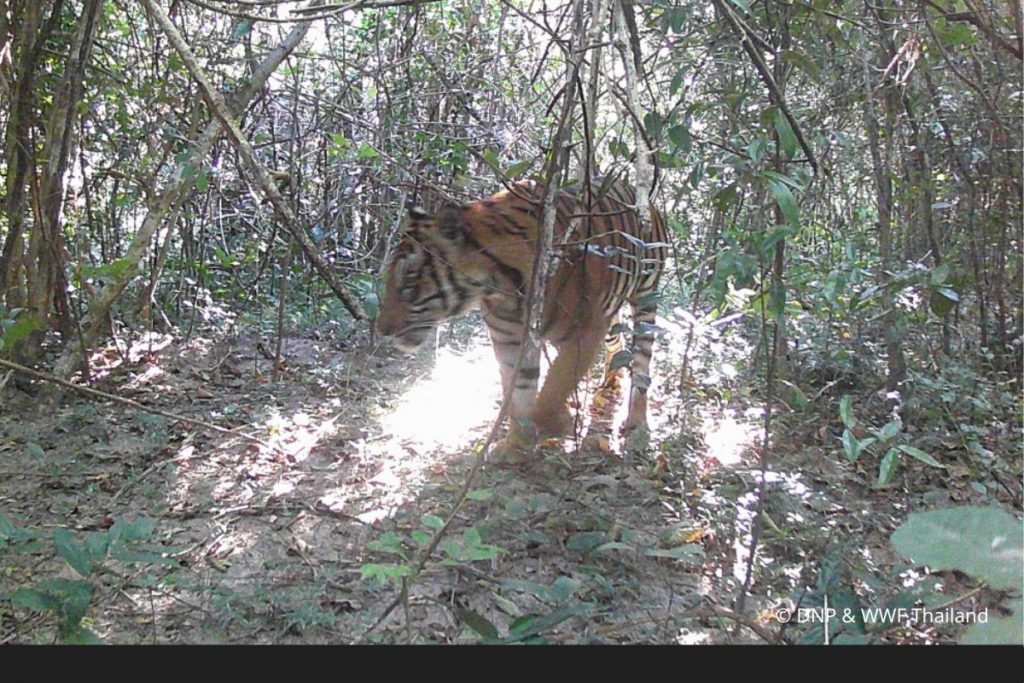
Figure 1. Adult male tiger KKT‑005M recorded by camera traps in Kuiburi National Park in 2024.
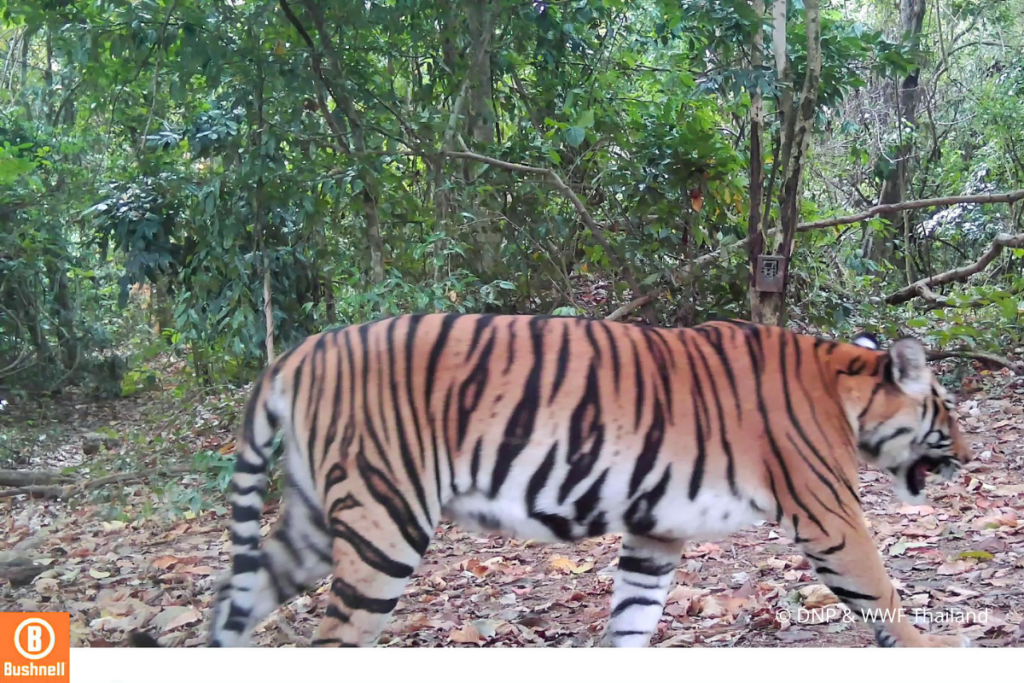
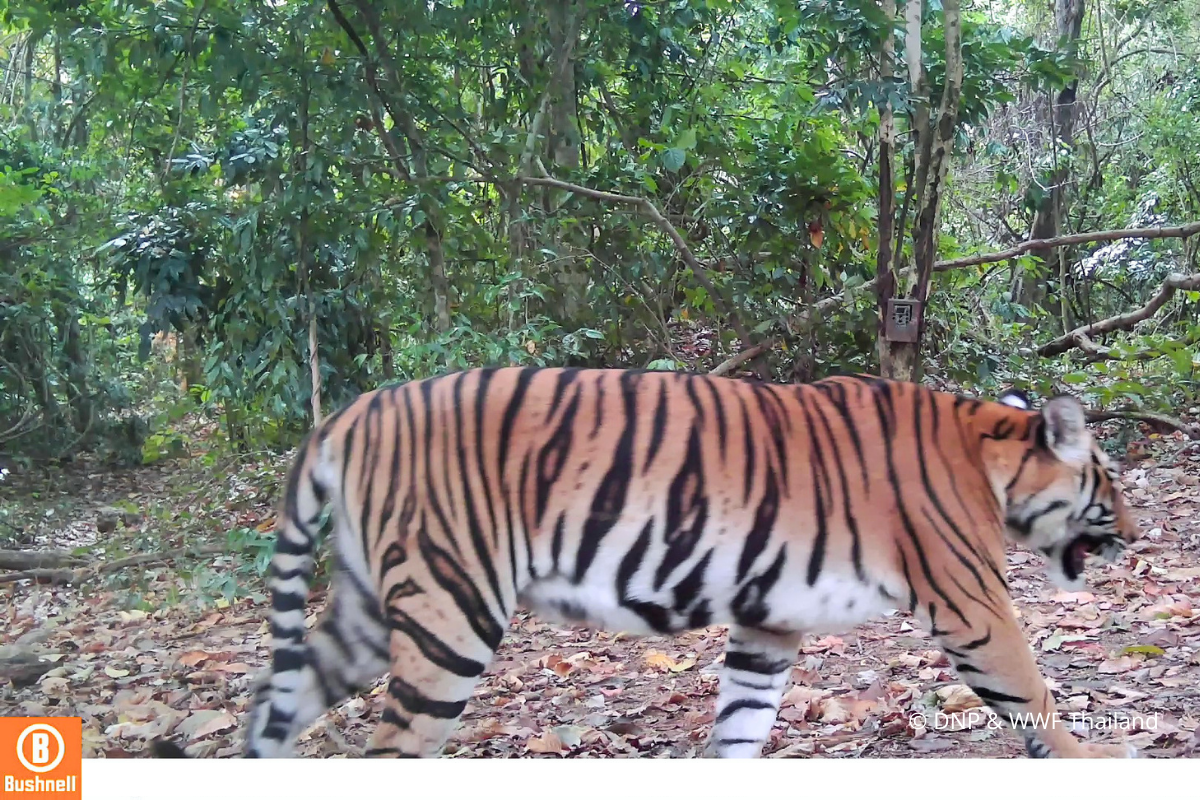
This hope strengthened further in 2026 when collaborative wildlife monitoring by Kuiburi National Park and WWF Thailand recorded a juvenile female tiger through biodiversity camera-trap surveys. Stripe‑pattern analysis confirmed the tiger as one of the offspring of KKT‑003F, a tigress documented with three cubs in Kaeng Krachan National Park in July 2024. After that initial record, neither the tigress nor her cubs were detected again. The rediscovery of one of the cubs—now a dispersing subadult—in Kuiburi in January 2026, having traveled over 80 kilometers, highlights the extraordinary ecological connectivity between these two forests.
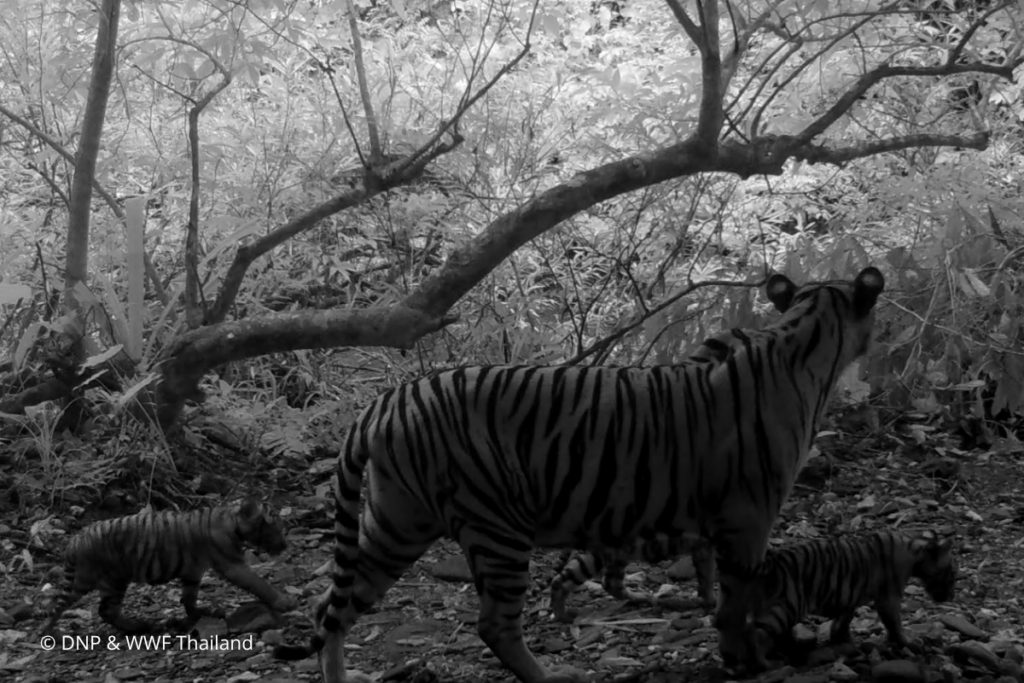
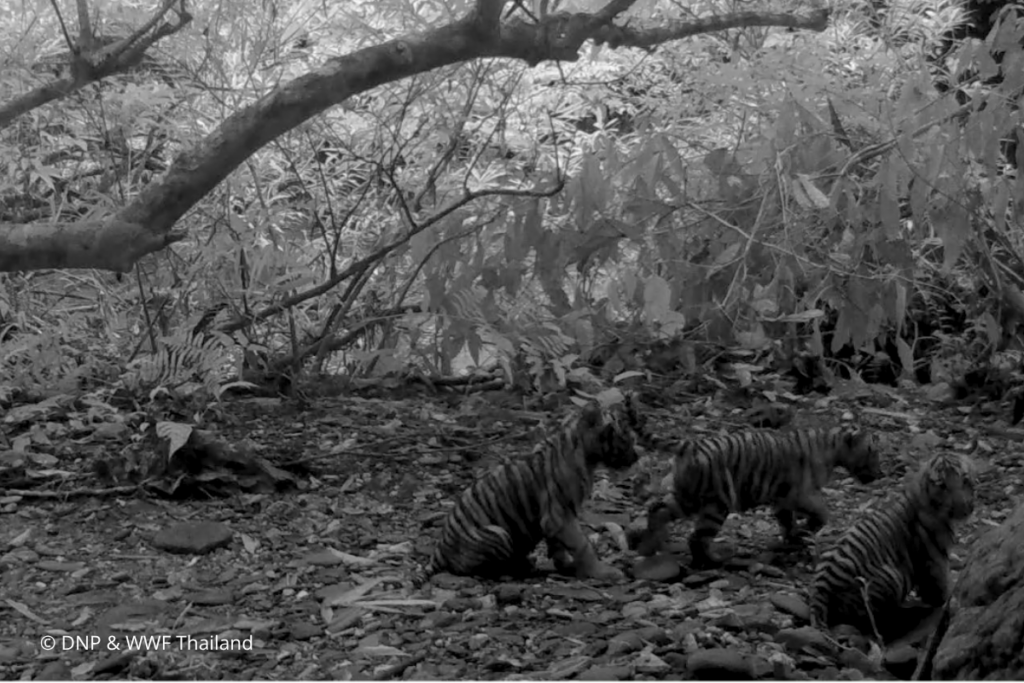
Figure 2. Tigress KKT‑003F and her three cubs recorded in Kaeng Krachan National Park (July 2024).
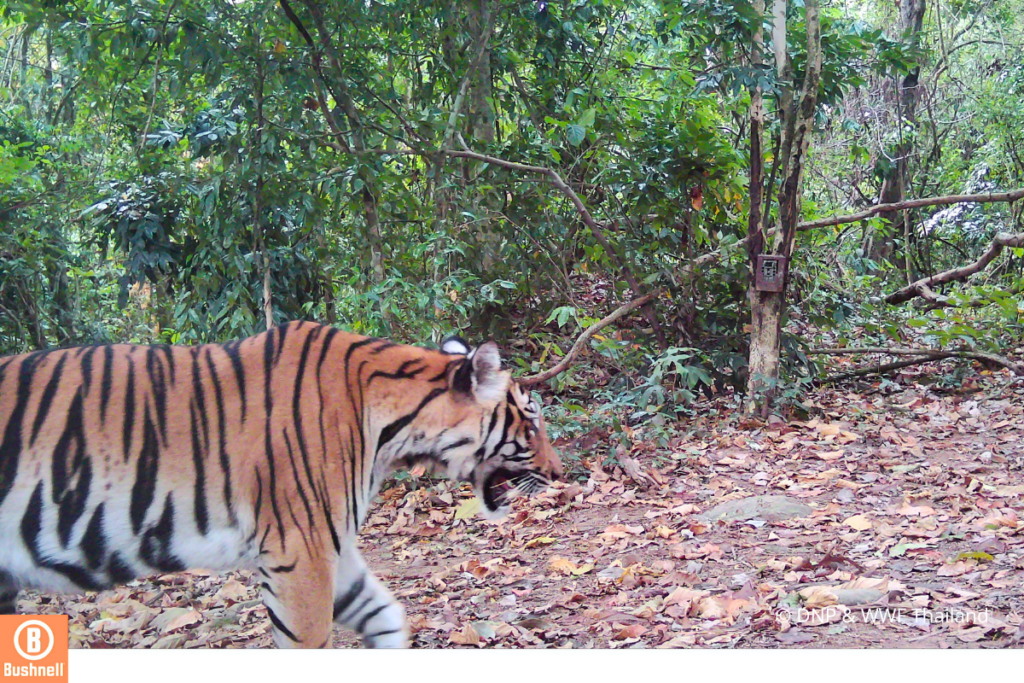
Figure 3. Juvenile female tiger recorded in Kuiburi National Park (January 2026).
Based on morphological assessment and camera-trap images, the female tiger is estimated to be 1.9–2 years old, corresponding to the natural dispersal age at which juvenile tigers leave their mothers to establish new territories. Her presence in Kuiburi indicates multiple positive ecological signals: improved habitat conditions, increasing prey availability resulting from grassland and forage restoration, and strengthened protected area management through systematic patrols.
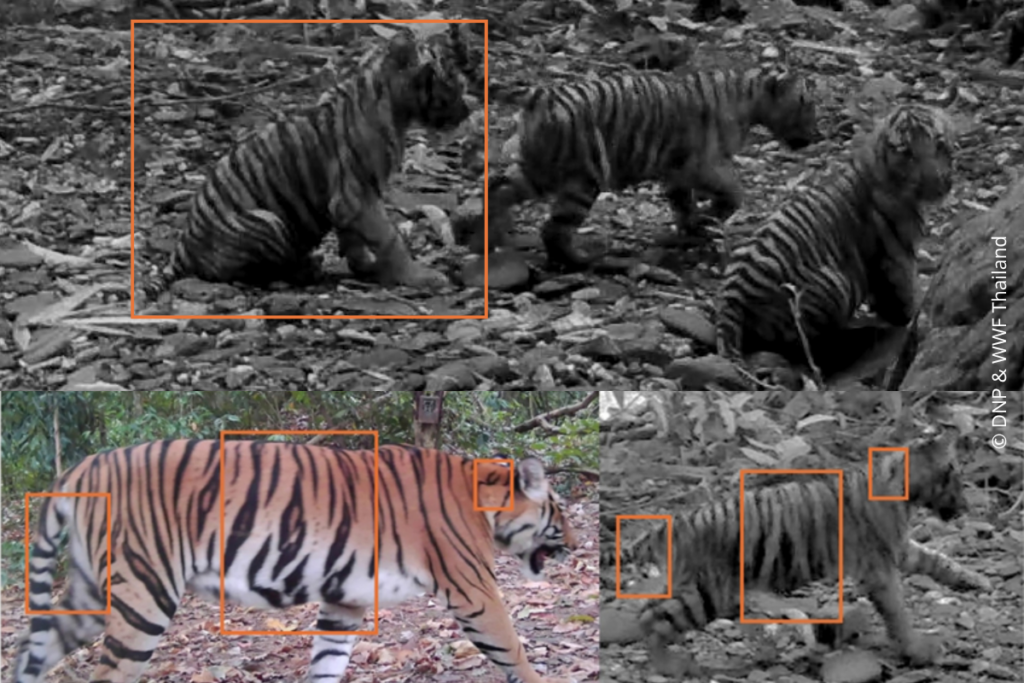
Figure 4. Identity-matching analysis confirming the individual tiger.
These findings are the result of more than natural ecosystem processes. They reflect sustained collaborative conservation efforts involving Kuiburi National Park, WWF Thailand, the Department of National Parks, partner conservation organisations, and—critically—local communities. Efforts such as grassland restoration, creation of artificial salt licks, SMART patrols, reducing human-wildlife conflict, and promoting sustainable ecotourism have all contributed to creating a safer and healthier environment for tigers, elephants, and other wildlife.
The recent tiger detections mark a renewed period of hope for Kuiburi. They suggest that the forest may once again become a viable habitat for tigers, provided conservation actions continue strategically and cooperatively among all sectors.
As Thanee Dawrueng, Project Manager for Wildlife Conservation in the Kaeng Krachan Forest Complex, emphasised: “Successful conservation requires collaboration across all sectors—including scientific research, habitat management, ecotourism practices, and human–wildlife conflict mitigation—to ensure that nature can thrive sustainably alongside human communities.”
This remarkable return of an apex predator demonstrates the tangible outcomes of long‑term conservation efforts. It reaffirms that meaningful ecological recovery is possible when people and nature are supported through coordinated, science‑based conservation action.