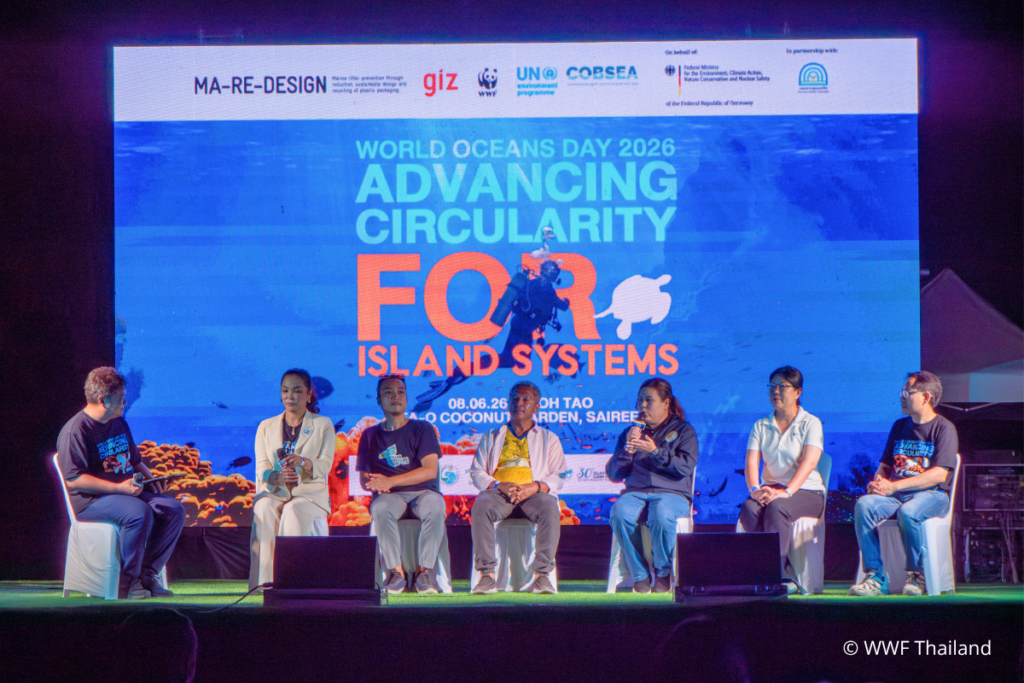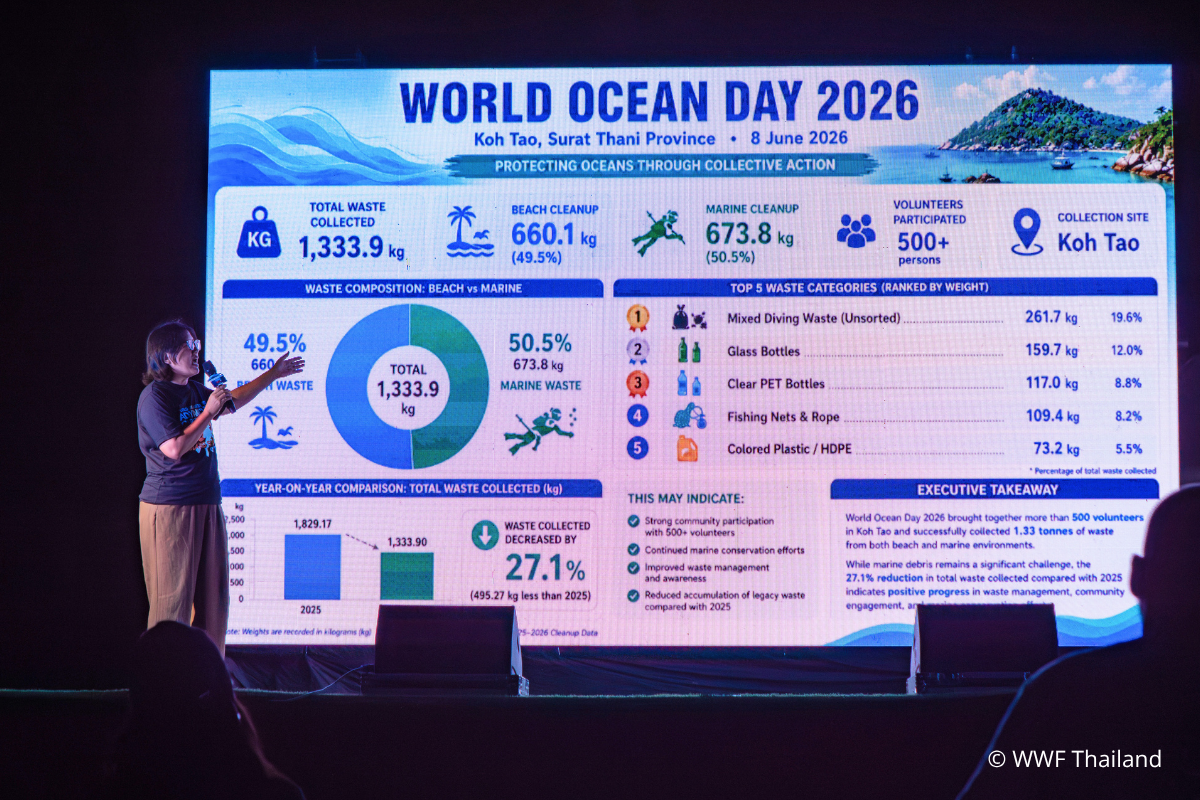
“Koh Tao and Trang City” have joined forces with the World Wide Fund for Nature (WWF Thailand), the Deutsche Gesellschaft für Internationale Zusammenarbeit (GIZ), and UNEP COBSEA, with support from the Federal Republic of Germany, to announce the achievements of the MA-RE-DESIGN Project in Koh Tao. The project has successfully advanced systematic waste management based on circular economy principles, contributing to more sustainable communities and marine ecosystems. These achievements are the result of strong collaboration among government agencies, local authorities, educational institutions, businesses, and communities, which have jointly developed integrated waste management models while empowering young people as key agents of change. The initiative aims to promote community-level waste management efforts into tangible actions for the protection and restoration of marine ecosystems.

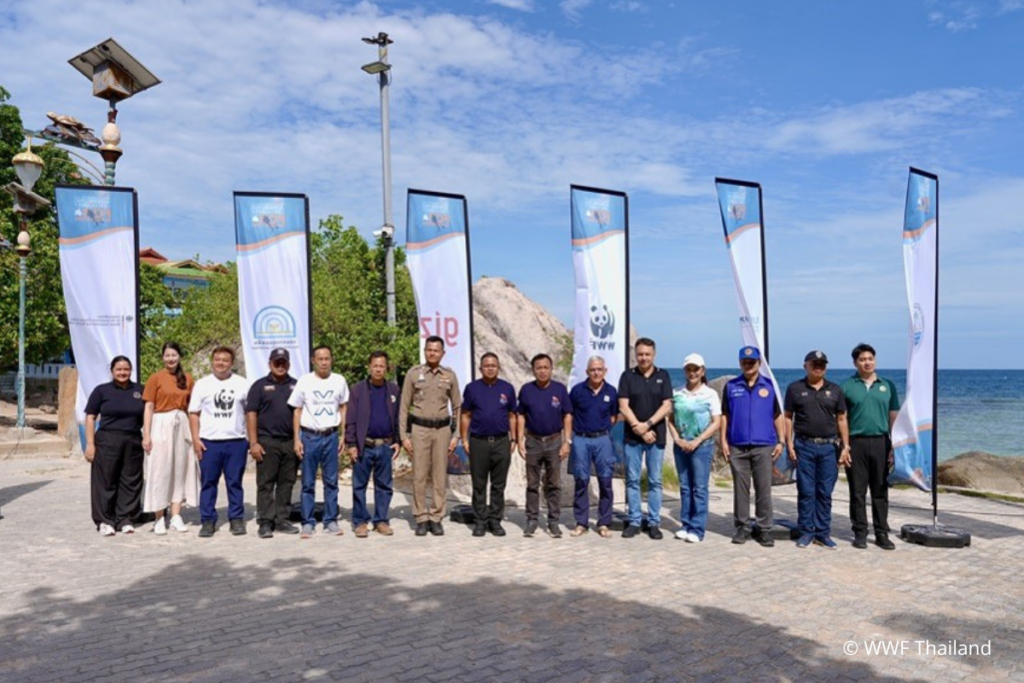
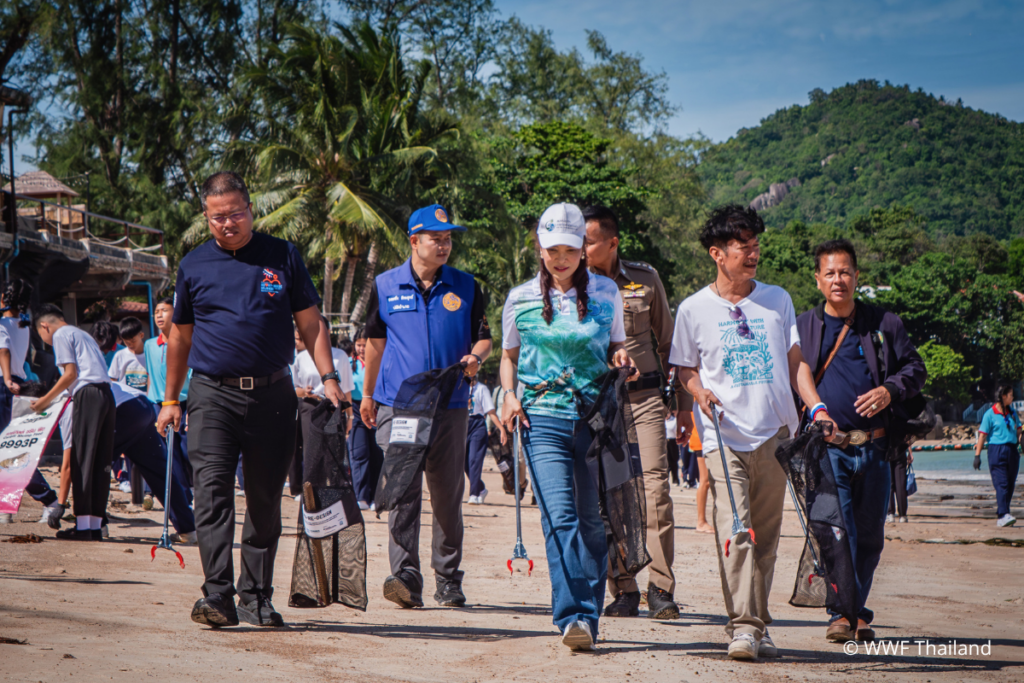
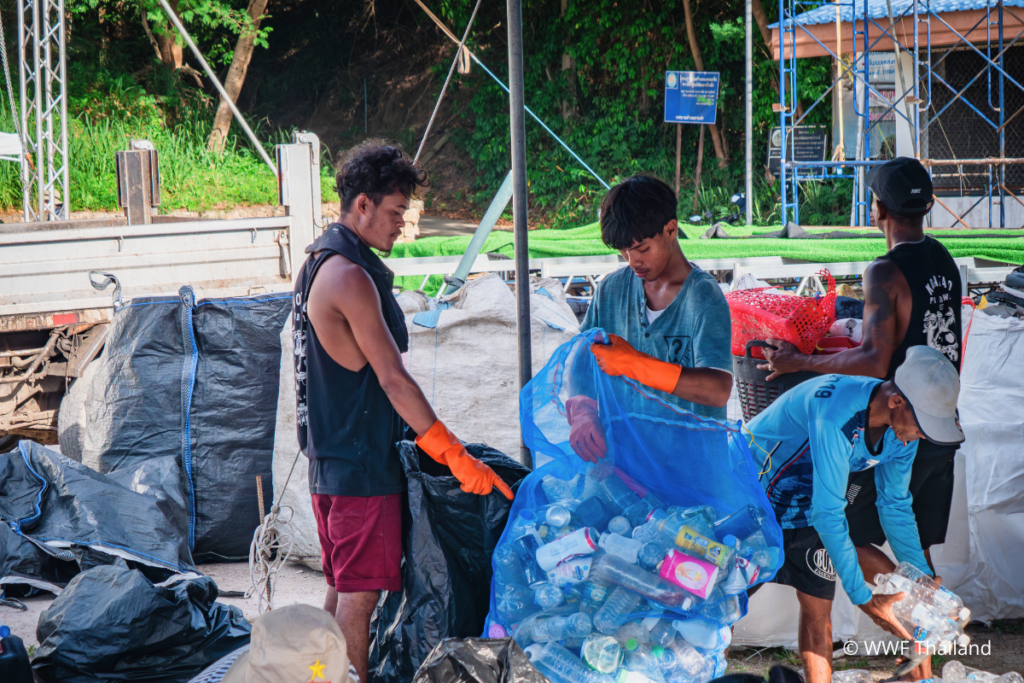
Significant Reduction in Waste Collected during World Oceans Day 2026 on June 8, 2026 that were conducted by WWF Thailand under MA-RE-DESIGN Project in “Advancing Circularity for Island Systems” theme. In addition, receiving an honour from Mr.Paisit Thongjerm, Chief Officer of Koh Pha-ngan remarks on the opening session. More than 500 volunteers participated in beach and underwater cleanup activities across Koh Tao. A total of 1,333.90 kilograms of waste was collected, representing a 27.1% reduction compared with 2025, when 1,829.17 kilograms were collected. The decrease of 495.27 kilograms reflects the success of ongoing waste management efforts and heightened awareness among residents and stakeholders on the island.
Of the total waste collected in 2026, 660.1 kilograms (49.5%) originated from beaches, while 673.8 kilograms (50.5%) came from marine environments. The five largest waste categories by weight were:
- Mixed and unsorted diving-related waste – 261.7 kg (19.6%)
- Glass bottles – 159.7 kg (12.0%)
- Clear plastic bottles – 117.0 kg (8.8%)
- Fishing nets and ropes – 109.4 kg (8.2%)
- Coloured plastics and HDPE plastics – 73.2 kg (5.5%)
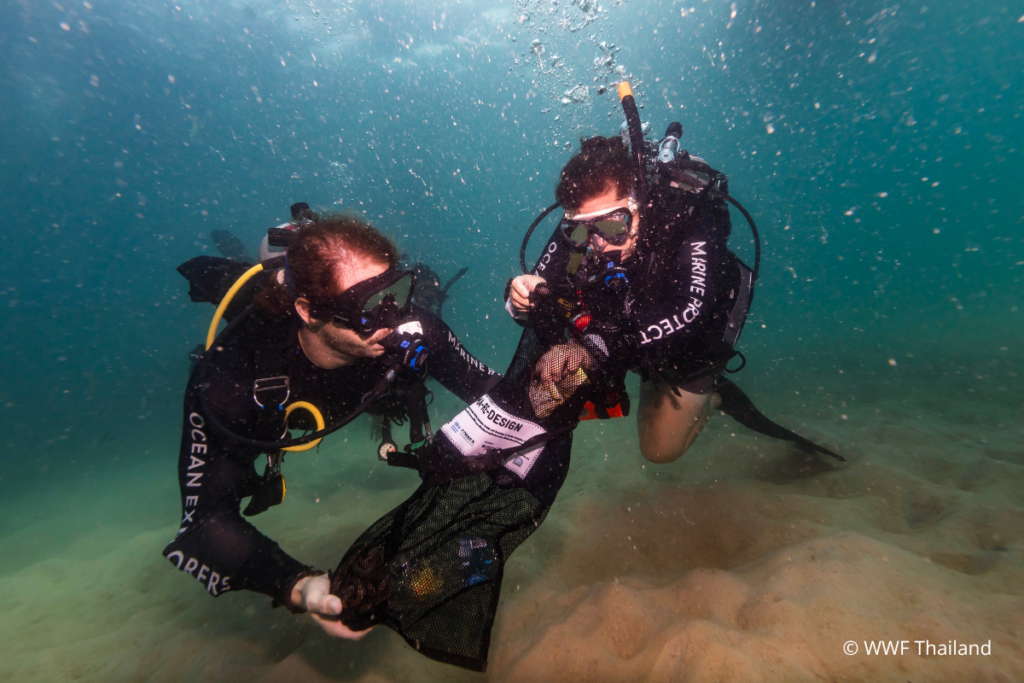
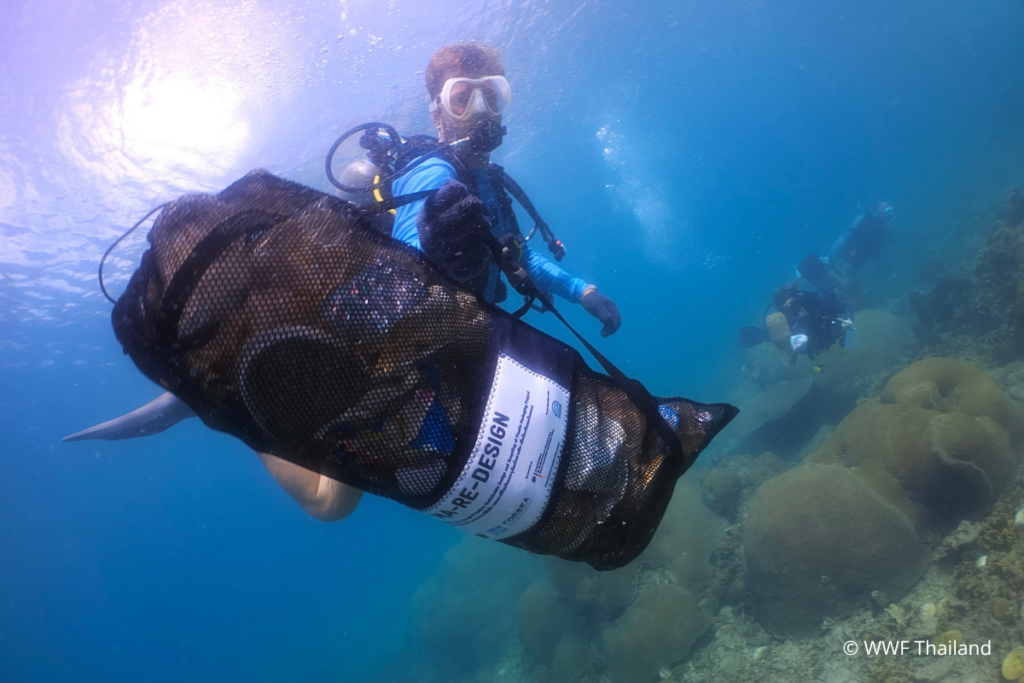
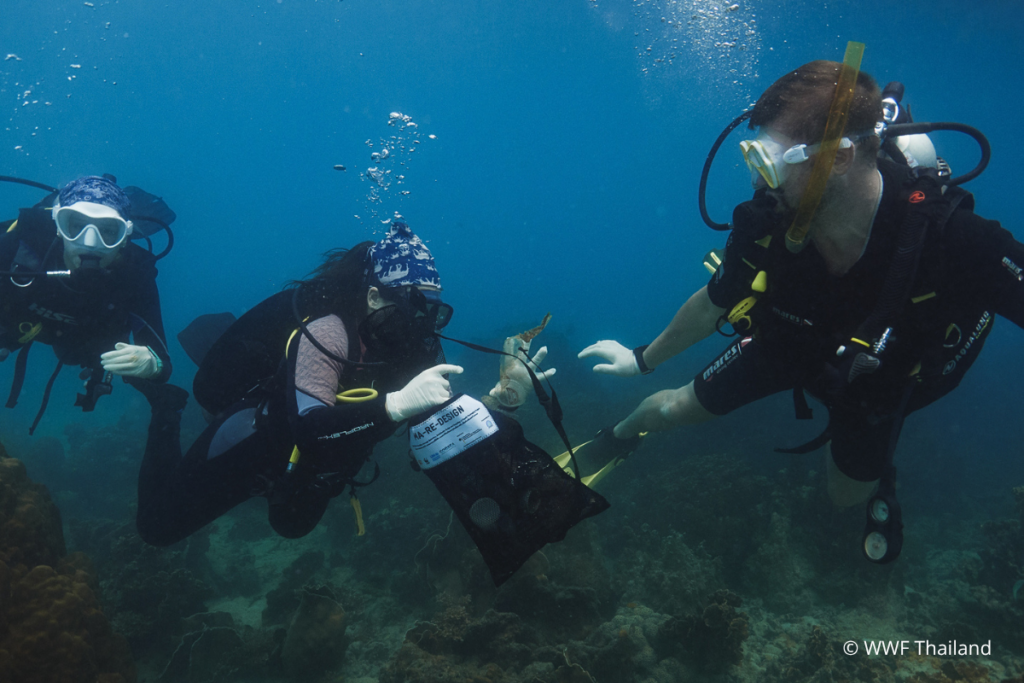
In Surat Thani Province, Koh Tao has emerged as an Island Innovation model under the theme “Advancing Circularity for Island Systems.” Through the MA-RE-DESIGN Project, cooperation among local authorities, tourism businesses, communities, and the diving sector has addressed challenges unique to island environments, including seasonal fluctuations in waste generation and high transportation costs.
Five key mechanisms have been introduced:
- Koh Tao PSC Action Plan – Establishing a collaborative framework among municipality, communities, and the tourism business sector.
- Tourism Business Engagement – Promoting voluntary commitments among hotels, restaurants, and other businesses to reduce single-use plastics.
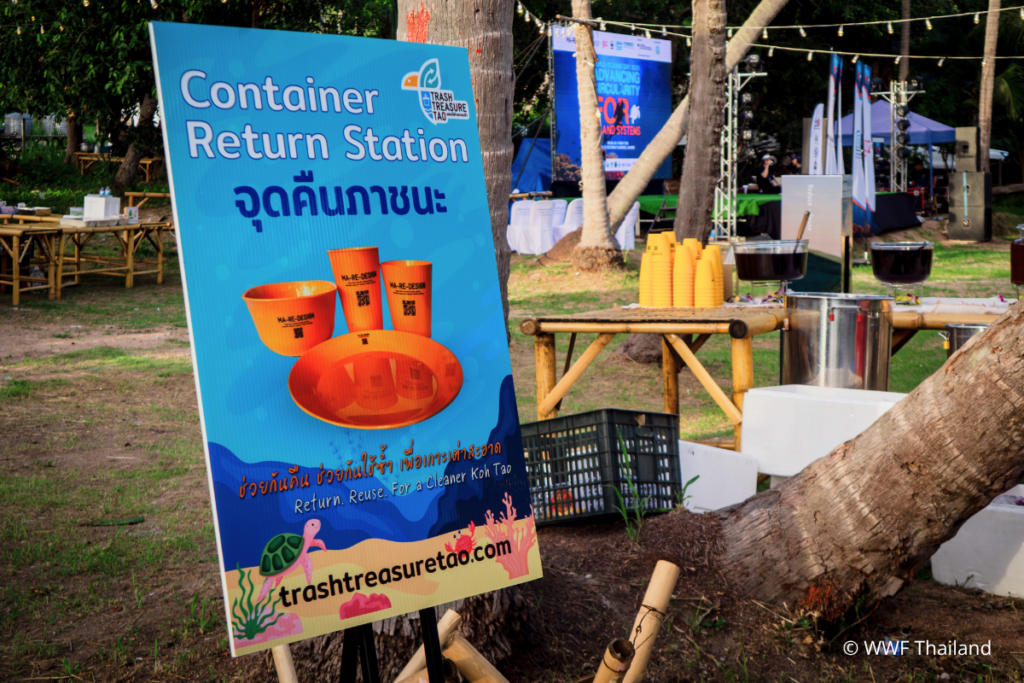
- Deposit Return System – Piloting refundable deposit schemes for food and beverage containers during events.
- Trash Treasure Tao – Supporting a community waste bank that facilitates the collection, sorting, and proper recycling of materials.
- Value Chain for Low-Value Recyclables – Creating pathways to transport low-value but high-cost recyclable materials, such as glass, foam, and plastic bags, from the island to recycling facilities on the mainland.
The MA-RE-DESIGN Project demonstrates that the true essence of the circular economy can only be realised when all sectors work together to co-design systems and foster collective action. Koh Tao’s circular waste management model has shown strong potential as scalable models that can be replicated and adapted in other areas.
These initiatives provide practical pathways for advancing Thailand’s transition towards cleaner, environmentally friendly cities while promoting responsible tourism that safeguards natural resources and contributes to a more sustainable future for people and the planet.