Thailand is leading a quiet but profound shift in how conservation is done—one that could redefine the relationship between protected areas, communities, and the state.
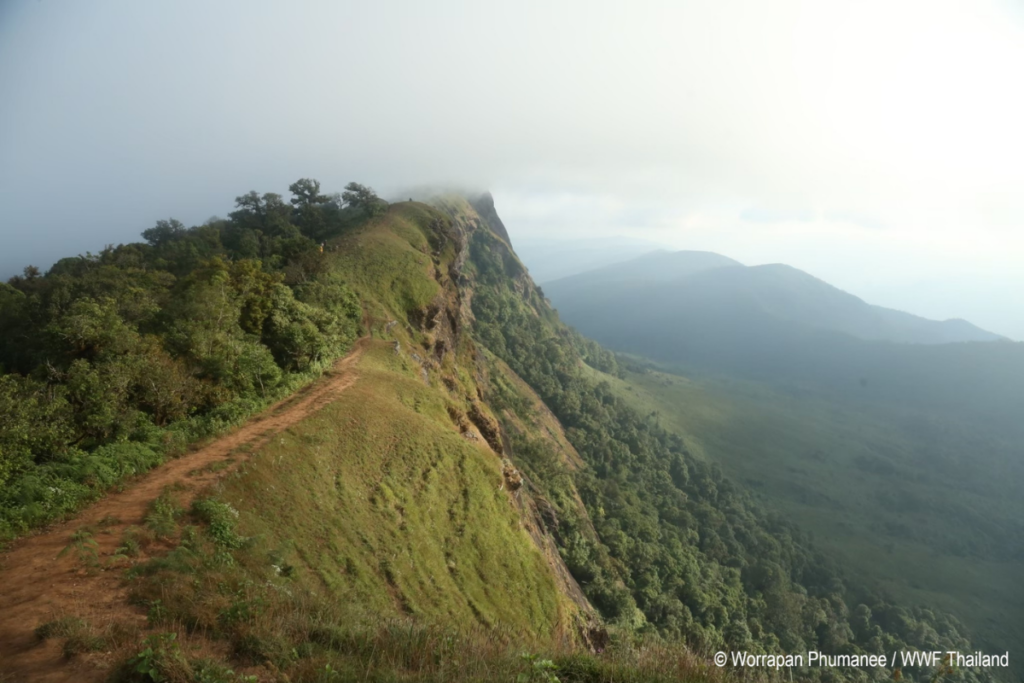
As Thailand aims to achieve its 30×30 commitments, there are growing concerns from communities nationwide about how new protected areas are designated. The National Human Rights Commission of Thailand (NHRC) has publicly acknowledged both the problem—and the solution. In a recent high-level dialogue with the Department of National Parks, Wildlife and Plant Conservation (DNP), the Commission highlighted the Doi Soi Malai–Mai Klai Pen Hin proposed National Park process, implemented in partnership with WWF Thailand, as a powerful model for how conservation can move forward with legitimacy, trust, and shared ownership.
From conflict to co-creation
According to the NHRC, a significant proportion of complaints related to protected area designation stem from limited public participation and inadequate consultation. When communities feel excluded, conservation efforts risk becoming flashpoints for conflict—weakening both social cohesion and environmental outcomes.
The Doi Soi Malai–Mai Klai Pen Hin experience signals a decisive shift away from that pattern. As National Human Rights Commissioner Ms. Sayamon Kraiurawong noted, this process demonstrated that conservation does not have to come at the expense of communities. Through transparent dialogue, careful facilitation, and genuine participation, WWF Thailand showed that conservation can be built with people—earning consent rather than enforcing compliance.
This is more than good practice; it is proof of concept.

A shared acknowledgement at the highest level
The message resonated at DNP’s leadership level. The Director-General openly acknowledged the structural and on-the-ground challenges involved in establishing new protected areas—particularly where community concerns are longstanding and complex.
Crucially, DNP recognised that working with independent institutions and trusted facilitators such as WWF Thailand is not a weakness, but a strength. Such collaboration helps rebuild trust, improves the quality of consultation, and creates space for constructive problem-solving before conflict escalates.
Turning recognition into decisive action
This turning point is now being translated into concrete commitment. The NHRC has allocated THB 1 million to support participatory consultation processes in three proposed protected areas:
- Nayu–Nam Som National Park
- Hat Khanom–Mu Ko Thale Tai National Park
- Mae Chaem Non-Hunting Area
WWF Thailand will serve as the facilitator in Mae Chaem—one of the most sensitive and contested sites. The funding will enable WWF Thailand staff travel, accommodation, and intensive engagement across 12 villages, ensuring that community perspectives are systematically heard, documented, and reflected in decision-making.
Notably, DNP made a strategic decision to shift external facilitation from another site to Mae Chaem—an explicit vote of confidence in WWF Thailand’s role as a neutral and credible bridge between communities, civil society, and government agencies.
Building systems, not one-off success
This initiative is designed to deliver lasting change, not isolated wins. Implementation will begin with capacity-building for protected area leaders and staff from all three sites, followed by careful local preparation and village-by-village consultations.
Looking ahead, lessons from Doi Soi Malai and Mae Chaem will inform national-level reform under Thailand’s 30×30 conservation commitment. WWF-Thailand will support post-Q3 capacity-building on participatory engagement and help develop a practical, field-tested manual for participatory protected area designation—grounded in real experience, not theory.


Why this moment matters
This collaboration marks a genuine turning point. It signals a move away from conservation imposed on communities toward conservation shaped with them—where human rights, local knowledge, and biodiversity protection reinforce one another.
By aligning government leadership, a national human rights institution, and WWF-Thailand’s facilitation expertise, Thailand is not just improving processes—it is setting a new national standard for inclusive conservation.
This milestone sends a clear message: protecting nature and respecting people’s rights are not competing objectives. Together, they are the foundation of conservation that is legitimate, resilient, and built to last.