
1. Scope: WWF-Thailand is working on a project to increase knowledge and understanding of the conditions faced by, and the lack of conservation benefits of, tigers in captivity, as well as reduce demand for tiger products and future purchase intentions among Thais. At present, there are at least 50 facilities housing over 1,900 captive tigers, many of which operate as wildlife tourist attractions frequented by both domestic and international tourists. According to a poll conducted by NIDA in 2021, 75% of Thai nationals surveyed believe that tiger parks have conservation benefits for wild tigers, while 7% of respondents support the use of tiger parts and products
Even in cases where facilities are not directly involved in illegal trade, their contribution to conservation remains highly questionable and is a matter of international concern. Tigers bred in captivity are generally not eligible for reintroduction into the wild and therefore do not contribute to the recovery of wild populations. Moreover, such facilities risk perpetuating consumer demand for tiger parts and products, confusing the public and legitimizing their use and purchase. Furthermore, animal welfare concerns are also widespread. Captive tigers are often kept in spaces insufficient for their physical and psychological wellbeing, and animals used for visitor interactions (e.g. photo opportunities). Despite these realities, public perception remains mixed. This campaign intends to reach key customer segments that visit tiger facilities and are potential consumers of tiger parts and products.
2. Objective: This project aims to address the following issues related to captive tiger situation in Thailand, including:
1. Correct Public Misconceptions Increase understanding among Thai audiences that captive tiger facilities do not contribute to wild tiger conservation or population recovery.
2. Expose Conservation and Welfare Realities Reveal the limited conservation value and widespread animal welfare concerns associated with captive tiger breeding and tourism facilities.
3. Reduce Demand for Tiger Products Challenge social acceptance of tiger parts and products by highlighting how captivity and tourism can perpetuate illegal trade and consumer demand.
4. Influence Consumer Attitudes and Intentions Decrease future visitation to tiger facilities and reduce purchase intentions for tiger-related products among key Thai consumer segments.
5. Strengthen Support for Wild Tiger Protection Build public support for conservation approaches that prioritize habitat protection, anti-poaching efforts, and the survival of tigers in the wild.
3. Duration: Mar2026 – May2026
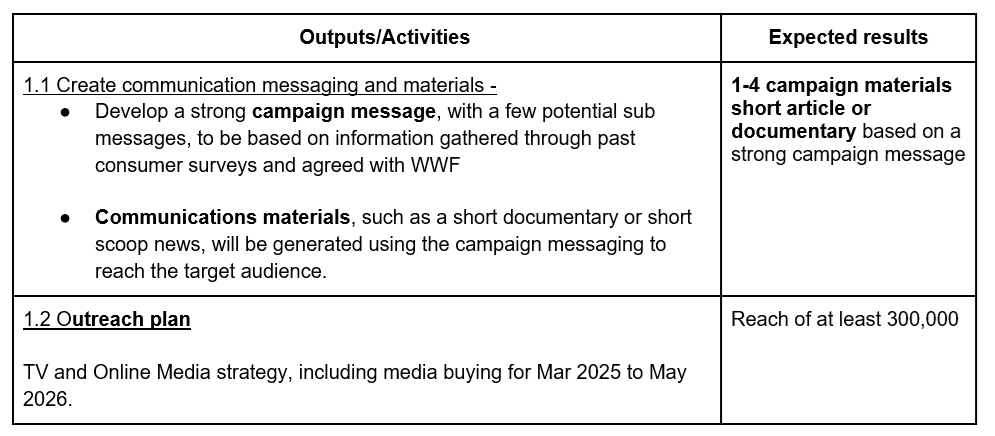
4. Deliverables:
The scope of work for the vendor will be to develop a documentary plan, produce primary video content, and implement outreach plan.
5. Key dates and Contact:
● TOR Announcement on 13 January. Please contact Thanisorn Baingern at Tel: 081-553-5330 or Email: thanisornb@wwf.or.th Cc. procurement@wwf.or.th
● Proposals with project implementation and financial plan need to be submitted before
27 January 2026. Please explicitly list out quotations (value without VAT).
● Awarded the contract in Feb 2026
